
Theodore Roosevelt National Park Scenic Drives in the North Unit

Updated: Jul 29
Experience towering overlooks, roaming bison, wild horses, and the road that transformed Theodore Roosevelt into America's greatest conservation president.
When most travelers dream of America's greatest scenic drives, names like Going-to-the-Sun Road, Blue Ridge Parkway, or Utah's Highway 12 usually steal the spotlight.
But hidden away in western North Dakota lies one of the country's most rewarding—and surprisingly uncrowded—road trips.

The Theodore Roosevelt National Park Scenic Drive through the park's North Unit isn't simply another beautiful road. It's a journey through landscapes that shaped a president, rescued one man from unimaginable grief, and ultimately helped preserve millions of acres of America's wilderness for future generations.
If you're searching for an unforgettable scenic drive filled with dramatic overlooks, incredible wildlife, fascinating geology, and powerful history, this hidden gem deserves a place at the very top of your bucket list.
Why Theodore Roosevelt National Park Scenic Drives Are So Special
Unlike many national parks where traffic jams are almost guaranteed during peak season, Theodore Roosevelt National Park's North Unit offers something increasingly rare:
Silence.
The 14-mile scenic drive winds through rugged badlands, colorful cliffs, prairie grasslands, and sweeping river valleys while attracting only a fraction of the visitors found elsewhere in the park. According to the tour guide, the North Unit receives only about 10% of the visitors seen in the South Unit, making it an ideal destination for travelers seeking solitude and uninterrupted views.

Instead of bumper-to-bumper traffic, you'll likely find yourself sharing the road with grazing bison, soaring hawks, and perhaps even a herd of wild horses crossing the prairie.
A Scenic Drive That Changed American History
Few roads in America carry as much historical significance.
In 1883, a 24-year-old Theodore Roosevelt arrived in the Dakota Territory wearing polished city clothes, spectacles, and carrying a pearl-handled revolver. Local ranchers reportedly assumed the wealthy New Yorker wouldn't last a week.
Then tragedy struck.
Only months later, Roosevelt lost both his wife and his mother on the very same day. Heartbroken, he returned to the North Dakota Badlands seeking solitude.
What he found instead changed his life forever.
He became a rancher.
He learned resilience through brutal winters.
He survived financial disaster after the infamous 1886 blizzard devastated his cattle operation.
Most importantly, these rugged landscapes transformed him into the conservation-minded leader who later established national parks, forests, wildlife refuges, and monuments across the United States. Roosevelt famously called these badlands "the romance of my life."
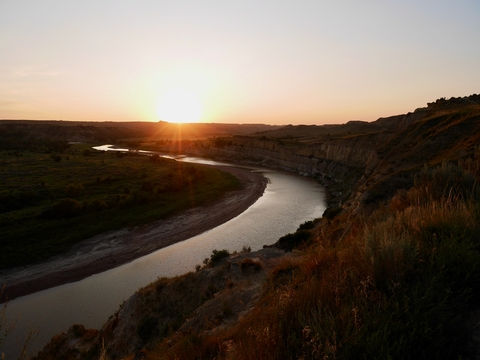
As you drive through the park today, you're literally following the same landscapes that shaped one of America's most influential presidents.
Incredible Wildlife Around Every Bend
One of the biggest reasons travelers love Theodore Roosevelt National Park scenic drives is the wildlife.
Unlike zoo animals or fenced preserves, the wildlife here truly belongs to the landscape.
Keep your eyes open for:
Massive American bison grazing the prairie
Wild horses roaming freely across the coulees
Elk moving quietly through the valleys
Bighorn sheep on rocky slopes
Golden eagles soaring overhead
Prairie dogs and mule deer
The park's bison herd is particularly meaningful.
By the late 1800s, fewer than 1,000 bison remained in North America after widespread slaughter. Theodore Roosevelt later helped establish conservation efforts that ultimately brought the species back from the brink of extinction. Today, more than 600 bison once again roam Theodore Roosevelt National Park.
Watching these enormous animals wander freely across the grasslands is one of the most unforgettable experiences of the drive.
The Scenic Stops You Can't Miss
River Bend Overlook
This may be the finest viewpoint in the entire North Unit.
A short paved walk leads to a beautifully preserved stone shelter built by the Civilian Conservation Corps in 1937. From here, the Little Missouri River curves gracefully through the colorful badlands nearly 400 feet below, creating one of North Dakota's most iconic panoramas.
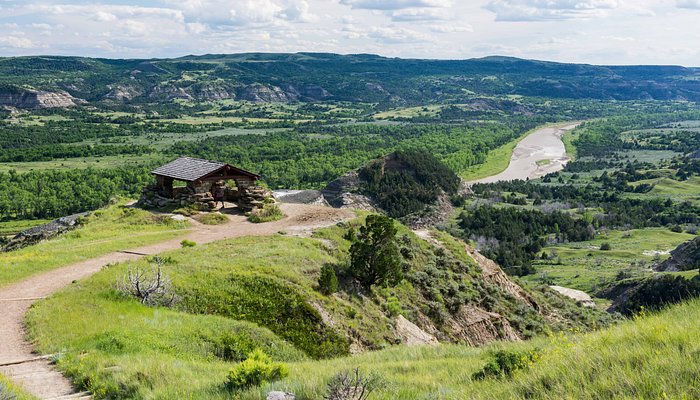
Spend a few quiet minutes here and you'll understand why Roosevelt kept returning to this landscape.
Cannonball Concretions
At first glance, you'll wonder if giants once played marbles here.
Scattered across the hillsides are dozens of enormous perfectly rounded boulders known as cannonball concretions.

These strange geological formations took approximately 65 million years to form as mineral-rich groundwater slowly cemented sand around ancient organic material beneath the earth's surface. As softer rock eroded away, these remarkable stone spheres emerged like buried treasure waiting to be discovered.
They're among the most unusual geological features you'll find in any U.S. national park.
Oxbow Overlook
At the end of the scenic drive lies perhaps the most breathtaking reward.
The Little Missouri River loops through the wilderness in a perfect horseshoe bend, surrounded by endless badlands stretching toward the horizon.
This overlook isn't merely scenic.
It's symbolic.
Standing here, it's easy to imagine the young Theodore Roosevelt realizing that this harsh landscape would forever change who he was.

Bring binoculars—you may spot elk, bison, or soaring raptors while enjoying one of the quietest viewpoints in the American National Park System.
More Than Beautiful Scenery
Theodore Roosevelt National Park tells stories stretching far beyond Roosevelt himself.
Long before settlers arrived, the Hidatsa people lived throughout this region, cultivating corn, beans, squash, and sunflowers while maintaining rich spiritual traditions centered on the "Old Woman Who Never Dies," a revered corn spirit whose teachings remain part of Hidatsa culture today.

The colorful badlands themselves also reveal a remarkable geological history. Layers of sandstone, volcanic ash, bentonite clay, and ancient wetlands document millions of years of environmental change, creating one of the most fascinating open-air geology classrooms in North America.
Tips for Driving Theodore Roosevelt National Park
To make the most of your visit:
Allow at least 3–5 hours instead of simply driving through.
Stop at every major overlook.
Bring binoculars for wildlife viewing.
Start early morning or late afternoon for the best wildlife activity.
Carry water, sunscreen, and sturdy walking shoes.
Drive slowly and respect wildlife crossings.
Never approach bison or wild horses—they may appear calm but remain unpredictable.
The road itself is only 14 miles long, but the real magic comes from stepping out of your vehicle and experiencing the landscape firsthand.
Why This Scenic Drive Belongs on Your Bucket List
Some scenic drives impress with towering mountains.
Others amaze with waterfalls or ocean cliffs.
Theodore Roosevelt National Park offers something different.
It offers perspective.
Here you'll witness landscapes shaped over tens of millions of years, encounter wildlife that once nearly disappeared forever, and follow the footsteps of a man whose personal transformation forever changed America's conservation legacy.
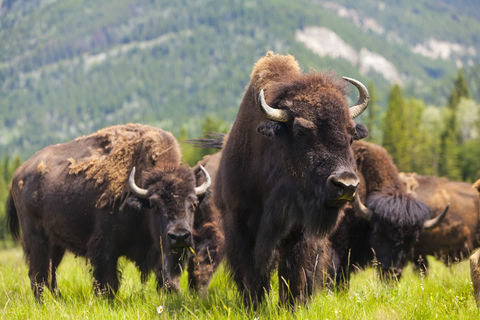
It's a road where geology, wildlife, history, and human resilience all meet.
And once you've driven it, you'll understand exactly why Theodore Roosevelt believed this wild corner of North Dakota changed his life.
Download the Complete Theodore Roosevelt Driving Tour
Pictures can only tell part of the story. To truly experience the Theodore Roosevelt National Park Scenic Drive, let expert narration guide you as you travel. Discover fascinating stories about Roosevelt's ranching years, the Hidatsa people, the park's incredible wildlife, the mysterious cannonball concretions, hidden overlooks, and the dramatic events that shaped this unforgettable landscape—all automatically triggered by GPS as you drive.
Download the full Teddy Roosevelt Driving Tour today and transform your road trip into an immersive journey through one of America's most remarkable national parks. Your next great adventure begins the moment you press play.


Comments