
Haunted Krakow: A Walking Tour Through Poland's Darkest Legends

Krakow is often described as one of Europe's most beautiful medieval cities, and it earns that reputation in daylight. But once the sun drops behind the spires of St. Mary's Basilica and the crowds in Rynek Główny thin out, this city reveals a different personality.
Cobblestone streets that felt charming an hour earlier start to feel like corridors leading somewhere older and stranger. This is the version of Krakow that a haunted walking tour exists to uncover, and it's a version built on a genuinely unsettling mix of documented crime, medieval superstition, and folklore that refuses to die.

A Haunted Krakow walking tour isn't a gimmick stitched together from generic ghost-story tropes. It's a route through real streets, real churches, and real historical sites, each one carrying its own layer of darkness. Some of what you'll hear is confirmed history. Some of it is legend passed down through centuries of retelling. The tour that inspired this guide, led by a storyteller who goes by Greg, draws a clear line between the two — and that honesty is part of what makes the experience so effective. You're not just being scared. You're being shown how a city's darkest chapters get absorbed into its identity.
Where Fact Meets Folklore
What separates a good haunted history tour from a forgettable one is specificity, and Krakow has an unusual abundance of it. This isn't a city relying on vague "some say a ghost lives here" filler. It has an actual unsolved-feeling true crime case, an architectural mystery baked into one of its most photographed landmarks, and a founding myth that's tied to a real, physically explorable cave. Here are the three stories anchoring the tour, along with the historical detail behind each one.
The Vampire of Krakow
Not every ghost story in Krakow is folklore, and this is the one that proves it. Between 1964 and 1966, a Krakow teenager named Karol Kot carried out a series of violent attacks against elderly residents and children, ultimately killing two people. Kot reportedly bit and drank the blood of some victims, which earned him the chilling nickname "the Vampire of Krakow" in the Polish press. One of his earliest attacks took place inside a church, where a woman was stabbed while kneeling in prayer, a detail that still unsettles anyone standing near the Church of Sts. John the Baptist and John the Evangelist today .
What makes this story land so differently from the tour's other tales is the total absence of exaggeration required. Kot was arrested, tried, and executed by hanging in 1968 at the age of 21. In his final interview before his execution, he reportedly told authorities he expected to "meet with his victims" again soon.
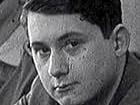
There's no myth to untangle here, no folklore layered on top of a kernel of truth. It's simply a documented case that turned ordinary streets in Krakow's Old Town into a place where residents, lacking any of today's instant alerts or shared photos, lived for two years with the knowledge that an attacker who looked completely unremarkable was still out there.
The Murderous Brothers of St. Mary's Basilica
Look up at St. Mary's Basilica in the Main Square and you'll notice something odd: its two towers don't match. The taller northern tower reaches about 82 meters and historically served as a watchtower and lookout point, while the shorter southern tower, standing around 69 meters, functions as the bell tower [web:9]. Guides and locals alike will tell you the mismatch isn't just a quirk of medieval construction scheduling. It's the visible scar of a legend about two brothers, both skilled builders, each assigned one tower.
Accounts of exactly how the story unfolds vary depending on who's telling it. In most versions, the brothers began their work at a similar pace, but one tower started rising visibly faster than the other. Jealousy took hold, and the version documented by the basilica itself states that the younger brother, watching his older sibling's tower surpass his own, murdered him with a knife and then completed the taller tower according to his own design [web:7]. Overcome by guilt, he confessed publicly during the tower's consecration and either stabbed himself or leapt to his death from the very tower he'd just finished. A large ceremonial knife, said to be the murder weapon, still hangs at the entrance to the Cloth Hall (Sukiennice) in the Main Square, and it remains one of the most photographed "true crime relics" in the city.

There's a second, quieter layer to this stop that most first-time visitors miss entirely. Every hour, a bugle call known as the hejnał mariacki plays from the taller tower, and the melody always cuts off mid-note. Legend attributes this to a medieval trumpeter who was shot in the throat by a Tatar arrow while sounding an alarm, and the interrupted tune has been performed that way, deliberately unfinished, for centuries.
The Dragon Beneath Wawel Hill
No haunted Krakow tour would be complete without descending toward the city's founding myth: the Wawel Dragon. According to the legend, first recorded in writing by Bishop Wincenty Kadłubek in a 13th-century chronicle, a fire-breathing dragon lived in a cave beneath Wawel Hill during the reign of the legendary King Krak, terrorizing the early settlement and demanding tribute, sometimes described as livestock, sometimes as young women [web:8]. Knights and warriors who tried to slay it in combat failed. The dragon was finally defeated not by strength but by trickery: a clever cobbler's apprentice, often named Skuba in later retellings, stuffed a sheep's carcass with sulfur and left it for the dragon to eat. The dragon devoured it, was overcome with burning thirst, and drank so much water from the Vistula River that it swelled up and burst.
What elevates this from a simple fairy tale is that its setting is completely real. Smocza Jama, the Dragon's Den, is an actual limestone karst cave running through the western base of Wawel Hill, roughly 270 meters long, and it has been documented and used by people since at least the 16th century.

Visitors today can descend into it through a brick stair tower via a steep spiral staircase of 135 steps, eventually emerging near the Vistula Boulevards, where a bronze dragon sculpture by artist Bronisław Chromy — installed in 1972 and famous for actually breathing fire — stands guard by the riverbank
.
Walking the Route: From Barbican to Dragon's Den
The tour itself is structured as a journey from the city's old military edge inward to its spiritual and political core, ending at its mythological foundation. That geography isn't accidental. It mirrors the emotional arc of the walk, moving from fortification and defense, through devotion and scandal, and finally down into legend itself.
Start at the Kraków Barbican and St. Florian's Gate. This fortified gate marks the ceremonial beginning of the Royal Route, the path once used for royal processions into the city. Long before dignitaries passed beneath it, sentries stood watch here, and local tales describe measured footsteps and metallic scraping sounds still heard near the old fortifications after dark, as if the watch never fully ended.
Continue to the Czartoryski Museum. Home to Leonardo da Vinci's Lady with an Ermine, the museum was founded by Princess Izabela Czartoryska, a powerful and controversial figure whose personal life was as talked-about as her cultural ambitions. The tour frames the building less as an art destination and more as a place still carrying the restless energy of the aristocratic rivalries and secrets that shaped it.
Pass through Świętego Marka Street to the Church of St. Mark the Evangelist. A monastery stood on this site since the 13th century, home to Augustinian canons locally nicknamed the "Marks" or "Horners." By the late 18th century the monastery had emptied out, but legend holds that one presence never left, a devotional echo that locals say still lingers around the church.
Walk to the Church of Sts. John the Baptist and John the Evangelist. This is where the Karol Kot story anchors itself most directly, giving an otherwise quiet courtyard a genuinely uneasy undertone once you know its history.
Arrive at St. Mary's Basilica in the Main Square. This is the tour's architectural centerpiece, where the mismatched towers and the Cloth Hall knife bring the brothers' legend to life in front of you.
Head down Grodzka Street toward the Museum of Archaeology. Poland's oldest archaeological museum holds Egyptian mummies and preserved funerary artifacts, but its most talked-about object is a stone idol pulled from the Zbruch River, covered in carved faces and symbols that historians still debate the meaning of.

Pass the monument to Piotr Skarga on Kanonicza Street. Skarga was a real and influential 16th-century Jesuit preacher connected to Wawel Cathedral, but the legend attached to him afterward is far darker: a story of premature burial and waking up after the world had already declared him dead.
Climb toward Wawel Hill. The route deliberately shifts tone here, moving from street-level stories to the concentrated power of a hill where Polish kings were crowned and buried. Beneath the Renaissance courtyard lie the ruins of St. Gereon's Church, tied to modern legends about a mysterious energy point often called the Wawel chakra.
Finish at Smocza Jama and the Dragon Statue. The walk ends where Krakow's oldest legend meets a genuine cave you can descend into, followed by a view of the fire-breathing dragon statue on the Vistula riverbank, a fitting, theatrical close to a night spent moving between history and myth.
Why This Story Works After Dark
What makes Haunted Krakow more compelling than a typical ghost tour is the way it constantly shifts registers. One stop is a hard historical fact about a convicted killer. The next is a folk legend with no verifiable origin beyond centuries of oral storytelling. The one after that is a real archaeological artifact whose meaning is still debated by scholars. That unpredictability keeps you engaged in a way that a tour built entirely on invented ghost sightings never could, because you genuinely don't know, stop to stop, whether you're about to hear documented history or inherited myth.

Krakow also has a structural advantage most European cities don't: its Old Town survived World War II largely intact, meaning the buildings on this tour are the same physical structures the stories originally attached themselves to. When you're told a legend happened at a specific tower or a specific church door, you are, in most cases, standing at the actual location, not a modern reconstruction. That authenticity is a large part of why the city has become one of Europe's most requested destinations for dark history and ghost-focused travel.
Planning Your Own Haunted Krakow Night
If you're putting this walk on your own itinerary, timing matters. Starting at dusk gives you enough natural light to appreciate the Barbican and St. Mary's Basilica before the crowds and light fade, while ending near full darkness at Wawel Hill and the Dragon's Den delivers the atmosphere these final stops are built for. The full route, from the Barbican to the riverside dragon statue, covers most of the Royal Route and takes you through Floriańska, Grodzka, Senacka, and Kanonicza streets, so comfortable walking shoes are worth prioritizing over anything else.
Note that Smocza Jama operates on a one-way route with seasonal hours, so if descending into the cave itself is a priority, it's worth confirming it's open before you commit to finishing the tour there after dark. Either way, whether you walk it self-guided or with a narrator like Greg filling in the details as you move, Krakow after sunset offers something increasingly rare in European tourism: a walking tour where the scares are earned by real history, not manufactured for the occasion.
Krakow's daylight version, with its market stalls, café terraces, and postcard church façades, is only half the story. The other half waits until the lights come down, when phantom footsteps, jealous brothers, and a dragon's cave beneath a royal hill remind you that this city has always kept its darkest chapters close to the surface.
Ready to walk it yourself?
Reading about Krakow's darker side is one thing. Standing in front of St. Mary's mismatched towers at dusk, knife legend in mind, or descending 135 steps into the Dragon's Den with the story fresh in your ears, is another. The Haunted Krakow walking tour guides you through every stop in this post, step by step, with narration that tells you exactly where to stand, where to look, and when the next story begins.

Download the Haunted Krakow Walking Tour and turn tonight's walk into your own encounter with the city's phantom sentries, murderous brothers, and the dragon beneath Wawel Hill.


Comments