
San Antonio Missions Driving Tour: A Step-by-Step Itinerary from Mission Concepción to Mission Espada

Free parking, free admission, and a pace that actually works. Here is how to see all four missions in one relaxed day.
If you typed “san antonio san antonio texas” into a search bar hoping for something beyond the River Walk and the Alamo, here is my answer: drive the Missions. San Antonio Missions National Historical Park protects the largest concentration of Spanish Colonial churches in North America, and the four missions in the park are a UNESCO World Heritage Site. Better still for road trippers, the sites sit along one tidy ribbon of road beside the San Antonio River, so you can see them all by car without fighting downtown traffic.
The hard part is not finding the missions. It is knowing which order to visit them in, how long each stop really takes, where to park, and how to avoid the hours when tour buses and school groups fill the courtyards. This itinerary solves all of that. We start at Mission Concepción in the north and finish at Mission Espada in the south, with parking notes, timing tips, and pacing advice at every stop.
Quick Facts Before You Drive
Total route: about 6.5 miles from Mission Concepción to Mission Espada, roughly 15 minutes of pure driving on an average day.
Distance between missions: about 2.5 miles each.
Admission: free at all four missions.
Parking: free at every mission site.
Hours: the park is open daily from 9 a.m. to 5 p.m., while the outside grounds are open sunrise to sunset. The park closes on Thanksgiving, Christmas, and New Year’s Day.
Time needed: plan on 4 to 6 hours including drives, or a full relaxed day if you like to linger.
Hours and closures can change, so confirm them on the National Park Service website the morning you go.
Why Drive North to South
The missions run north to south along the river in this order: Concepción, San José, San Juan, and Espada. Driving that direction gives you three advantages. First, you begin at the mission closest to downtown, which makes for an easy start from any San Antonio hotel.
Second, you put the biggest stop, Mission San José, in the middle of the day when you have the most energy. Third, you end in the quiet southern countryside, where the crowds thin out and the landscape feels closest to what Spanish colonial life must have looked like.
The Alamo is technically a fifth mission, but it is not part of the national park and it does not offer free parking, so this itinerary skips it. Save it for a separate downtown day.
When to Go: Timing Your Day Around the Crowds
Best season: October through April brings mild weather and comfortable walking. Summer is hot and humid, and parking and midday heat both peak then. If you visit between June and September, start at opening time and treat the noon hour as a lunch and air-conditioning break.
Best day: weekdays are calmer than weekends. School field trips cluster on weekday mornings during the school year, so if you see a row of yellow buses at your first stop, simply adjust the order of your visit or come back later.
Avoiding peak bus tours: guided coach groups tend to arrive mid-morning and stay through the early afternoon, especially at Mission San José, the most famous stop. The simplest strategy is to arrive at Mission Concepción right at 9 a.m., reach San José by about 10:30, and plan a late lunch so you hit San Juan and Espada in the quieter afternoon hours. If you are a photographer, the last hour before sunset is gorgeous, though keep in mind that buildings close at 5 p.m. and some gates are locked after hours.
A note on Sundays: the mission churches are active parishes. Services mean you may not be able to enter the sanctuary on Sunday mornings, so a weekday or Saturday works best if you want to see the interiors.
Stop 1: Mission Concepción
Begin at the oldest-feeling place on the route. Mission Concepción was dedicated in 1755, and its stone church remains true to its original design. It is often described as the oldest unrestored stone church in the United States. Look up inside the church and you can still spot faded traces of colorful geometric patterns that once covered the walls.
Parking: free on-site parking is provided, and the lot is easy to navigate. It can fill on busy weekends, but arriving at opening time nearly guarantees a spot.

What to do: walk the compact grounds, step inside the church, and visit the small museum and contact station. If a ranger is present, ask about tour times. Because the site is small, you will likely finish in under an hour, making it the perfect warm-up stop that sets the historical context for everything that follows.
Pacing tip: resist the urge to stretch this stop. You have the biggest mission still ahead.
Stop 2: Mission San José
Address: Visitor Center at 6701 San José Drive
Drive about ten minutes south, following the brown National Park Service signs, to the “Queen of the Missions.” This is the largest and most complete mission compound in the park, and it doubles as the park’s main visitor center.
Parking: a free lot sits beside the visitor center. This is the busiest site on the route, so arriving before the midday wave of tour groups matters here more than anywhere else.

What to do: start at the visitor center to pick up a map and watch the short film, Gente de Razón, which quickly sets up the history of the missions. Then walk the full compound. You will see the church with its ornate carved stonework, the long perimeter walls with their original living quarters, the granary, and the working gristmill. Take your time in the courtyards. This is the stop where you will want your camera ready and your water bottle full.
Pacing tip: this is your longest stop, so plan lunch afterward. The Southtown and Mission neighborhoods have local Tex-Mex spots, and a midday meal lets the bus-heavy hours pass while you recharge.
Stop 3: Mission San Juan
The next drive is roughly 2.5 miles and takes about ten minutes. San Juan feels different from the first two missions. It is smaller, quieter, and more rural, with the farmland and trails that remind you these were working communities, not just churches.
Parking: a free lot serves the site, and I have rarely seen it crowded, especially on weekdays.
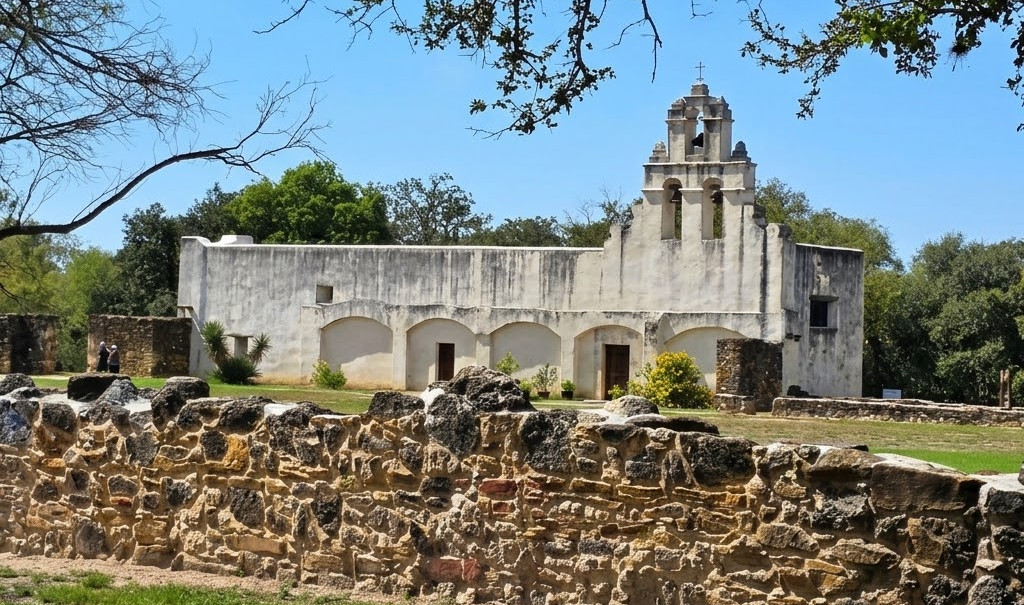
What to do: visit the chapel and the surrounding grounds, then wander out to the historic farm area and the nature trail if the weather is pleasant. The missions were self-sufficient villages, and San Juan does the best job of showing that agricultural side of mission life. Kids tend to love the open space here.
Pacing tip: this is a “breathe and wander” stop. If you are running behind, shorten it to 30 minutes and still come away satisfied.
Stop 4: Mission Espada
Mission Espada is the southernmost mission and arguably the most peaceful. The small chapel and the quiet grounds feel far removed from the city, and you will likely share the space with only a handful of other visitors.
Parking: free parking is available at the site and rarely a problem.

What to do: tour the chapel, look closely at the stonework of the compound walls, and stop at the contact station, if staff is present, to check on tour times. Espada is also your gateway to the water-management story of the missions. The acequia system you will see next carried river water to the mission fields, and it remains one of the oldest working irrigation networks in the country.
Pacing tip: take a few minutes to simply sit. By now you have seen a lot, and Espada rewards slow observation.
Practical Tips for a Smooth Drive
Bring water and sun protection. Some of the best views are exposed, and Texas sun is no joke from May through September.
Download offline maps. Cell coverage is generally fine, but the road is a little winding, and the brown signs sometimes sit where you would not expect them.
Check conditions before you go. Weather, flooding, and maintenance can override the normal schedule at any site, so a quick look at the National Park Service page the morning of your trip pays off.
Keep your parking expectations realistic. Admission and parking at the missions are free, but tours, partner products, and nearby attractions may not be, so keep a little cash or a card handy for lunch and souvenirs.
Respect the sites. These are active churches and protected World Heritage landmarks. Keep your voice down in the sanctuaries, and ask before using a tripod or doing a commercial shoot.
Bring a charged phone. The park offers a cell phone tour, and it makes a nice audio companion between stops.

Final Thoughts
A San Antonio Missions driving tour is one of the best things to do in San Antonio, Texas precisely because it is so easy. There is no ticket line, no parking fee, and no complicated reservation system. You simply follow the river from the cool stone of Mission Concepción to the sun-washed arches of Mission Espada and watch nearly three centuries of history unroll beside the road.
Start early, keep your pace flexible, and let the afternoon quiet do the rest.
Ready to Drive It? Download the Self-Guided Driving Tour
Want this itinerary in your pocket? Download the free Self-Guided San Antonio Missions Driving Tour for a printable route map, stop-by-stop parking notes, a time-of-day planner, and a checklist of what to bring. Save it to your phone, print it for the dashboard, and enjoy the road with confidence.
Download the Self-Guided Driving Tour Now


Comments