
The Ghosts of New Harmony, Indiana: A Walking Tour Through America's Most Haunted Utopia

The streets of New Harmony, Indiana look almost too peaceful to hold a secret. Brick cottages lean into quiet, tree-lined blocks. Gardens sit behind low fences. A church without a roof opens its arms to the sky. It is the kind of place where you'd expect the loudest sound after dark to be your own footsteps on the sidewalk.
That expectation does not survive the walk.
New Harmony was founded in 1814 by Harmonist utopians, German immigrants who believed the end of the world was near and built a disciplined religious community to prepare for it. Eleven years later, the town changed hands entirely, sold to Welsh industrialist Robert Owen, who tried to build a different kind of utopia altogether, one grounded in reason, education, and social reform. Two competing visions of perfection rose and fell on the same streets within a single decade. Both experiments eventually dissolved. The buildings did not. And if the stories told by generations of residents are to be believed, neither did everyone who once walked through their doors.
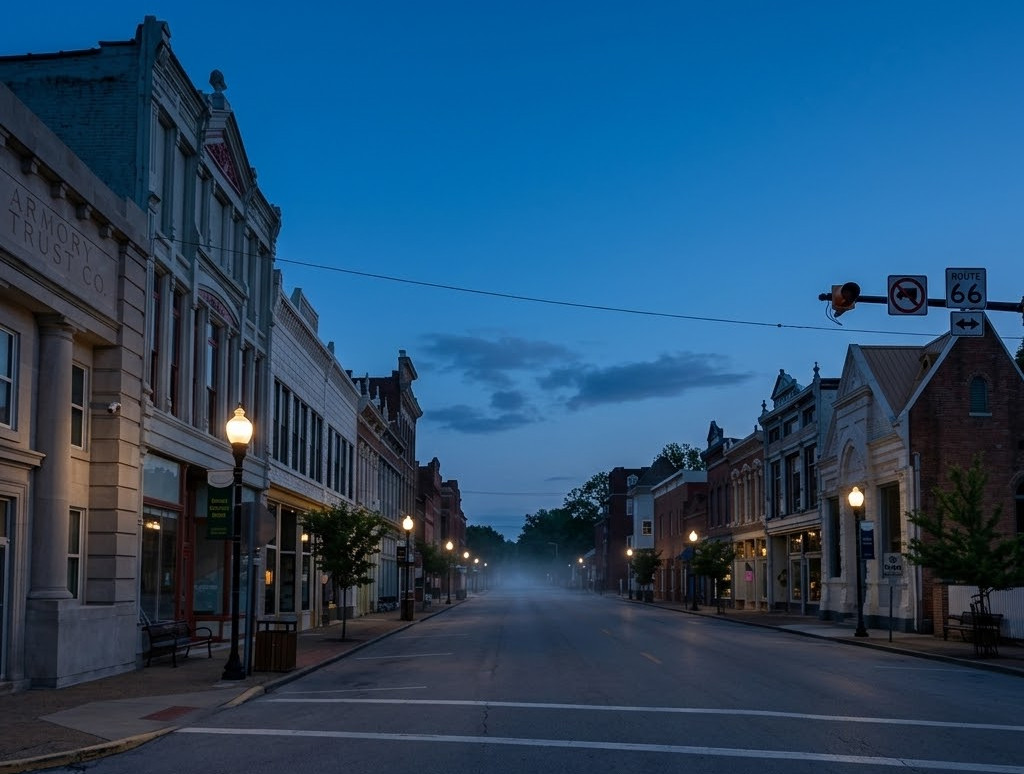
This is a guide to that darker undercurrent, the one that runs beneath New Harmony's tidy brick and quiet gardens. Fourteen stops, one town, and a history that apparently refuses to stay in the past tense. Keep your ears open. Some of these buildings answer back.
A Town Built on Two Failed Perfections
To understand why New Harmony is so thick with reported hauntings, you have to understand what kind of pressure this town was built under. The Harmonists who arrived in 1814, led by Johann Georg Rapp, did not come here to relax. They came to prepare, spiritually and physically, for what they believed was an imminent apocalypse. Daily life demanded absolute obedience. Rules were not suggestions. Every resident, from the youngest child to the eldest elder, lived inside a structure with almost no room for individual will.
That kind of communal repression, sustained across an entire town for over a decade, tends to leave a residue. Historians will tell you it left behind architecture, farmland, and religious records. The people who lead ghost walks through New Harmony today will tell you it left behind something else too, quiet pressure that never fully released, and a handful of spirits that apparently found ways to make themselves heard only after they no longer had to stay silent.

When Rapp sold the town to Robert Owen in 1825, the second experiment brought scholars, teachers, and scientists, some of whom arrived aboard the now-famous Boatload of Knowledge. Owen's utopia collapsed too, undone by disagreements over property and governance rather than religious doctrine. But by then, New Harmony had absorbed two entirely different kinds of intensity within the space of a single generation: religious devotion pushed to its limit, and idealistic ambition that burned out fast. Walk these blocks after dark, and locals say you can still feel both.
The House That Answers When You Knock
Few stops on the New Harmony ghost walk unsettle visitors quite like the David Lenz House and Garden on Church Street. Built around 1819, it is one of the few surviving single-family homes directly tied to the original Harmonist settlement, and on the surface it looks like nothing more than a sturdy, unremarkable timber-frame cottage.
Do not let that fool you.
David Lenz raised his family here under Rapp's uncompromising rule, one more household folded into a community defined by silence and total obedience. According to the stories still circulating among modern ghost-walk groups, something in that enforced quiet never fully settled. Visitors brave enough to knock on the heavy front door have reported something answering back from somewhere deep inside the supposedly empty house.
It rarely starts dramatically. The first knock in response is usually soft, muffled, easy to write off as a settling floorboard or an old house shifting in the cold. But witnesses describe the sound growing progressively stronger, until deliberate, heavy pounding seems to move from room to room. Guided tour groups have reportedly counted as many as six distinct knocks, each one echoing from a different part of the darkened house.
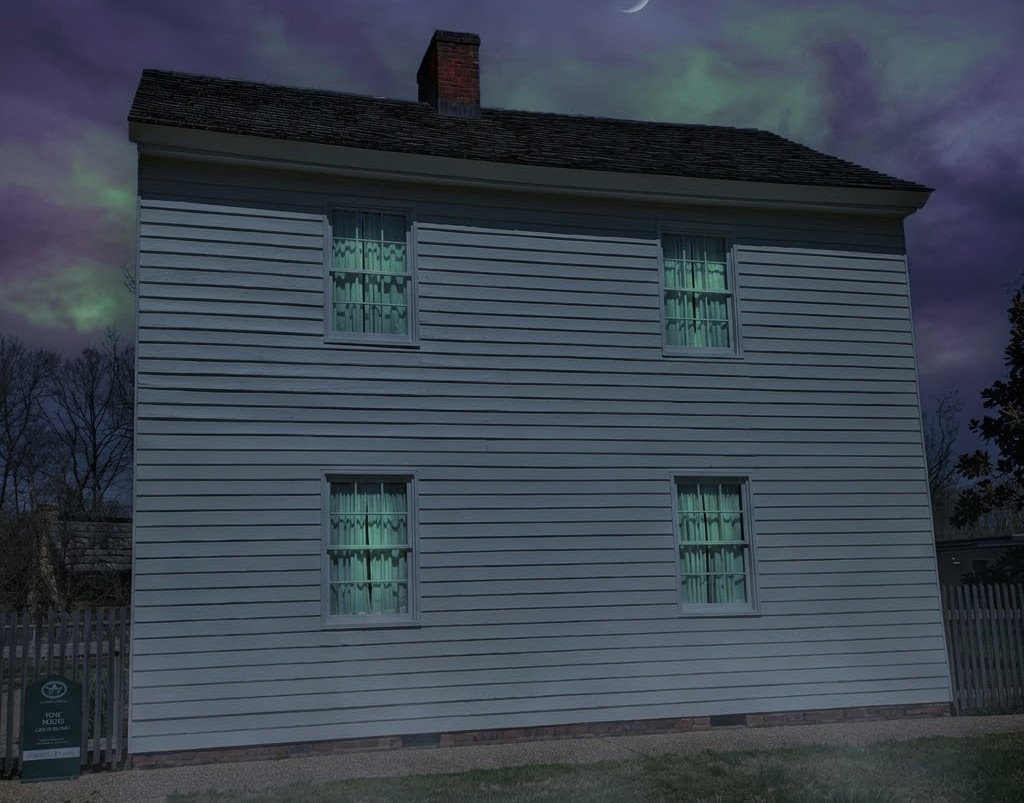
Some say it's David Lenz himself, still standing guard over the home he built. Others believe it's someone else entirely, a member of the Harmonist community who lived and died in total, obedient silence and only found a voice once there was no one left to demand their quiet. Either way, the instructions given on the actual walking tour are simple and unnerving in equal measure: knock once, then do not move, do not speak, and wait in the dark for whatever comes next.
The Fauntleroy Home and the Scent of Lavender
A few doors down on West Church Street stands the Fauntleroy Home, widely considered one of the most haunted addresses in all of New Harmony, Indiana. The hauntings here are less about sound and more about sensation, an unmistakable chill that visitors describe as deeply physical rather than merely atmospheric.
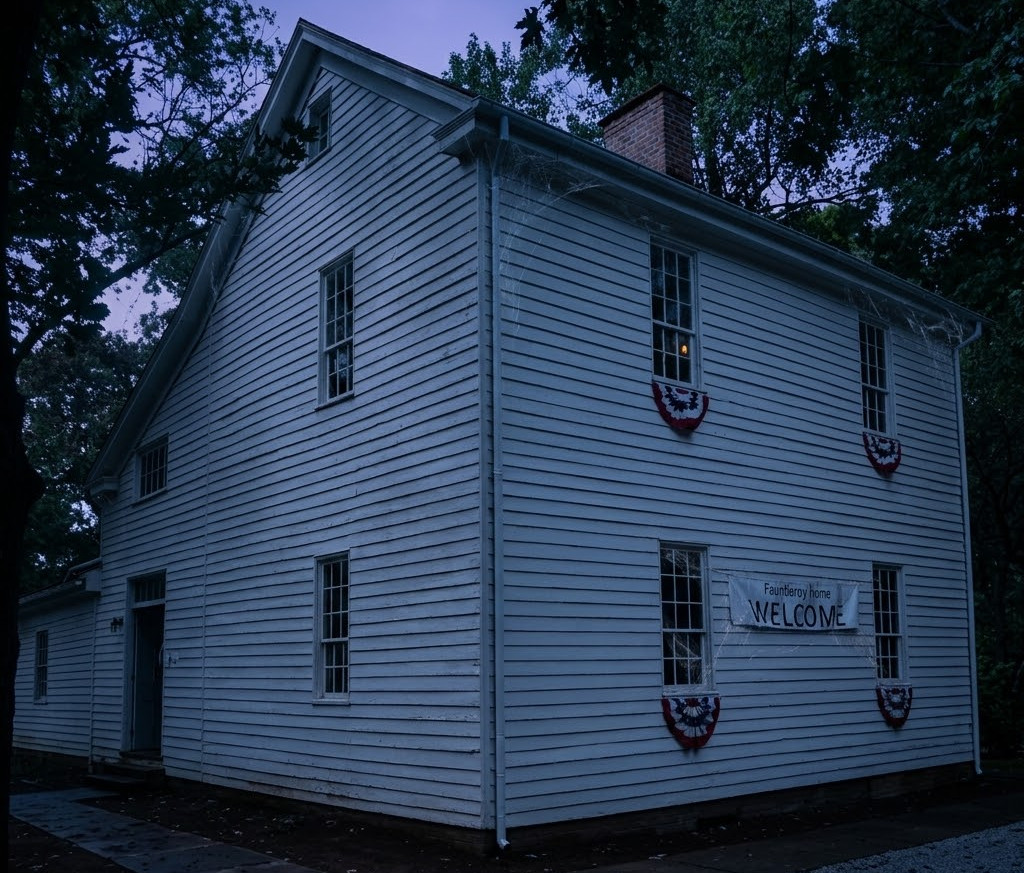
Docents and guests alike report the distinct feeling of being touched when no one else is anywhere near them. A cold hand settles briefly on a shoulder. Unseen fingers brush along an arm. A soft tap lands and vanishes the instant you turn to look. Freezing cold spots are said to bloom suddenly in otherwise warm, empty rooms, with no draft, no open window, and no explanation.
Then there is the lavender.
Visitors have repeatedly described catching a faint, unmistakable scent of lavender drifting through the house with no visible source anywhere nearby, no flowers, no candles, no perfume bottle left open on a dresser. According to the stories passed down through the community, lavender was the signature scent worn by Mary Emily, a woman closely associated with the home, who wore it regularly while guiding guests through its halls in life. Some volunteers report even stranger encounters: the sound of a harp playing softly from an empty parlor, its strings untouched by any living hand.
Beneath the Roofless Church
Not every ghost story in New Harmony involves a house. Some involve two hundred people who never got a headstone.
The Roofless Church, dedicated in 1960 and designed by architect Philip Johnson for oil heiress Jane Blaffer Owen, is one of the town's most striking landmarks. Enclosed by a high brick wall and centered on a shingled structure shaped like an inverted rose, it was purposefully built without a traditional ceiling, an open-air sanctuary meant to welcome people of every faith beneath a single shared sky.
It is a place of deliberate serenity by daylight. At night, according to the ghost walk, that serenity gets complicated.
Just beyond the church's protective brick wall lie more than two hundred completely unmarked Harmonist graves. No monuments. No names carved into marble. The Harmonists believed death made every soul equal, and their burial practices reflected the same stark communal values that governed their entire lives. Visitors standing near the central rose structure have reported faint, disembodied choral sounds drifting through the open air, sometimes a single mournful voice, sometimes what sounds like an entire unseen congregation singing together in the dark.
The sound is always distant, always soft, and always carried, seemingly, by the wind. Guests describe a sudden bone-deep chill settling into the sanctuary from nowhere, holding for a moment, and then dissolving just as fast, as if something had simply passed through on its way somewhere else.
Dinner With the Uninvited at the Red Geranium
Not every haunted stop on this tour is abandoned or crumbling. The Red Geranium restaurant, which opened its doors in 1964 with structural elements dating back to the 19th century, is a fully functioning dining establishment today, warm lighting, a well-stocked bar, tables set for lively conversation. It is also, according to longtime staff, host to company that never placed an order.
A longtime bartender has described two recurring apparitions tied to the building. One is a stocky older man who periodically materializes near the bar, as though checking in on the crowd. The other is a woman in a traditional bonnet who moves quietly between the shadowed alcoves of the dining room. She never speaks and never lingers, but staff saw her often enough over the years that she simply became known as "the lady."

The stranger reports come after closing. With the chairs empty, the doors locked, and the last conversation long since ended, staff have watched a wine glass suspended above the bar begin to sway on its own, with no draft, no open door, and no explanation for the movement. There are also recurring reports of the smell of old pipe tobacco drifting through empty rooms, even though no one has been permitted to smoke inside the building in decades. If you dine at the Red Geranium, the story goes, keep an eye on your table. Something might shift when you're not looking.
Eugene Thrall Never Left the Stage
Thrall's Opera House began its life in 1824 not as a theater but as a Harmonist communal dormitory, austere rooms filled with residents living under total obedience and shared silence. In 1856, the building was converted into a performance venue, and decades later it became associated with the man whose name it still carries: Eugene Thrall, who purchased the building in 1888 and died only a year later, before his renovation vision was complete. His widow finished the work in his honor.
According to New Harmony lore, Eugene never fully stepped away from the project he didn't live to see finished.
Picture the building after a late show ends. The audience has gone home, the seats sit empty, the stage lights are dark, and the doors are locked from the outside. In that silence, witnesses describe hearing footsteps crossing the stage, slow, measured, and deliberate, as though someone were walking the length of the room checking that everything is in order before the night closes. Staff and visitors report unnatural cold drafts moving through the balcony even in the height of summer heat, and the heavy stage curtain shifting after hours with no wind and no stagehand anywhere near it. The show may have ended over a century ago for Eugene Thrall. According to the people who still work in that building, his rounds haven't.
Objects That Move, Boots That Walk: The Old Mews and Artefakts
Two stops along Main Street reveal a quieter, stranger kind of haunting, the kind built not on apparitions but on things that simply refuse to stay where they were left.
At the Old Mews Building, a 19th-century structure once central to New Harmony's mercantile life, shopkeepers have reported items carefully arranged on display during business hours turning up moved by the next morning. Worse are the footsteps: the heavy, distinct sound of leather boots crossing the wooden floor of the upper level, a level that is supposed to be entirely empty. Anyone who has closed a shop alone after dark and heard a thud, then a step, then another step from a floor above them, understands exactly why this story has survived.

Down the street at Artefakts, a shop dealing in antiques and vintage collectibles from across Posey County, the space once held a private doll collection, endless rows of porcelain faces and unblinking glass eyes. Staff report antique wind-up clocks chiming without anyone winding them, and small, shapeless shadows darting across mirrors and glass long after closing. One employee reportedly refused to close the shop alone, convinced that dolls in a back cabinet followed her with their eyes no matter where in the room she stood. If you glance into the darkened windows tonight, the tour warns, make sure the only face looking back is your own.
The Gymnasium That Became a Morgue
Of every stop on the New Harmony ghost walk, none carries a heavier history than the Ribeyre Center. It opened in 1924 as the town's school gymnasium, a bright space built for basketball games and community gatherings. It was barely a year old when the Tri-State Tornado, still the deadliest tornado in United States history, tore across Missouri, Illinois, and Indiana on March 18, 1925, devastating nearby communities and nearly erasing the neighboring town of Griffin entirely.
In the disaster's aftermath, the gymnasium became a makeshift morgue. The polished floor meant for basketball games was lined instead with the bodies of the dead, while frantic families searched the rows for missing loved ones and neighbors hoped desperately not to recognize a name.

According to local ghost stories, something from that tragedy never fully left. Two child apparitions have reportedly been seen standing together near the old entryway, silent, still, and always watching, never approaching, never speaking. Another spirit, known locally as Anna, is said to make herself known far more actively: lights switching on in empty rooms, clicking off, then flickering to life somewhere else down the hall, with no one nearby and no mechanical explanation. Some believe Anna was a young tornado victim. Others think she simply enjoys the attention of the living, over a century later.
A Building That Warns the Living
Murphy's Auditorium, built in 1913 through a bequest from Dr. Edward Murphy, has anchored New Harmony's cultural life for well over a hundred years. Paranormal investigators using spirit boxes claim to have captured fragmented voices belonging to former actors and stagehands, brief bursts of speech emerging through white noise as though a rehearsal from decades ago were still quietly running in the dark.
One presence reportedly comes through more clearly than the rest: Gus, a former maintenance man remembered as gruff, direct, and entirely practical in life. According to local lore, he hasn't changed much in death. Investigators describe his voice as unmistakably no-nonsense, a man who still believes there's work to be done. In one widely repeated account, an investigating team claimed Gus warned them about faulty electrical wiring in a back area of the building. When they checked the junction box, the wiring genuinely needed attention. If Gus really is still walking the halls of Murphy's Auditorium, the story goes, he isn't trying to frighten anyone. He's just finishing the job.
The Library Where the Pages Still Turn
The tour closes at the Working Men's Institute, founded in 1838 by philanthropist William Maclure and still Indiana's oldest continuously operating free library, museum, and archive. For nearly two centuries, students, historians, and curious visitors have come through its doors searching for answers. According to the librarians who work there after hours, not every one of them has left.

Heavy books reportedly shift on high shelves when no one is nearby, and the sound of rustling pages drifts down aisles that are completely empty. Staff describe the sudden, distinct impression of someone brushing past them between the stacks, only to turn and find no one there. Paranormal investigators using the Estes Method claim to have captured disembodied voices offering answers unusually relevant to the Institute's early history. Whether or not those recordings hold up to scrutiny, there is something undeniably fitting about a library built for people who spent their lives seeking knowledge becoming the place where, according to legend, some of them simply never stopped looking.
Why New Harmony Still Feels Watched
Two utopias rose and fell here within a single generation, each one built on the belief that a perfect, controlled society was possible. Both failed. What they left behind was not just brick and mortar, but a town saturated with unresolved intensity, repression that never got a chance to speak, tragedy that arrived too fast to process, and ambition that burned out before it finished. Whether or not you believe a single word of what the guides tell you at each stop, walking these streets after dark makes the history feel less like something confined to a museum case and more like something still moving through the rooms around you.
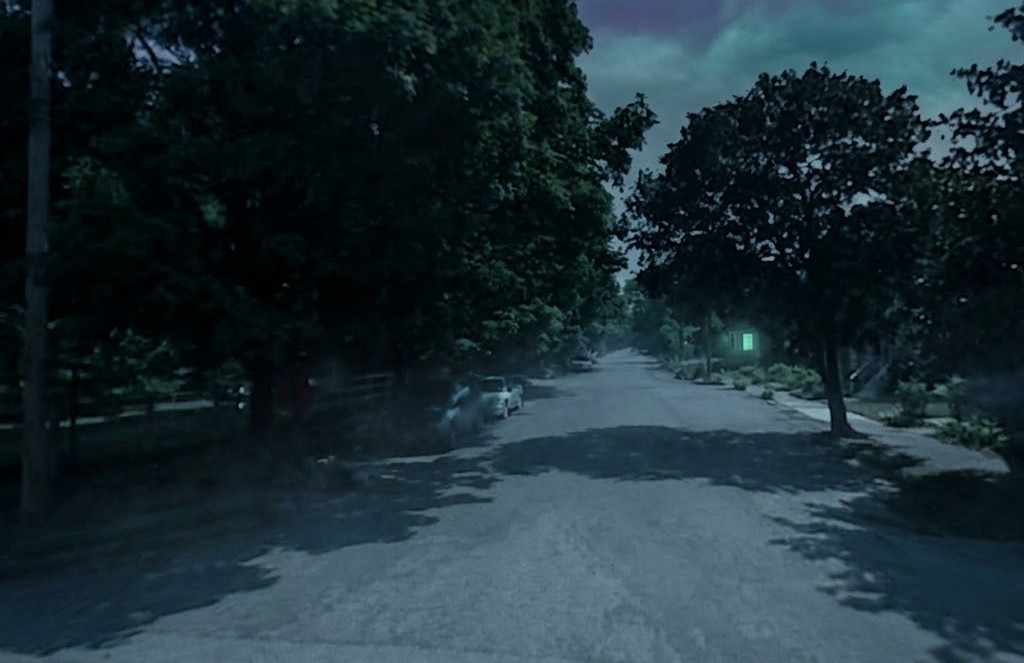
If you find yourself in New Harmony, Indiana after sunset, do the walk. Stand outside the Lenz House and knock, if you dare. Listen for the choir near the Roofless Church. Watch the windows above the old storefronts on Main Street. New Harmony spent two centuries trying to build something perfect. According to everyone who still hears it knocking back, it never quite finished the job.
Download the New Harmony Ghosts Walking Tour from WalknTours and get:
Turn-by-turn walking directions to all 14 haunted stops, from the Roofless Church to the Ribeyre Center
Full narrated ghost stories and history, ready to play through your headphones as you walk
The exact locations where visitors have reported knocks, cold spots, phantom music, and more
A self-guided experience you can start the moment the sun goes down
History doesn't stay quiet in New Harmony. Grab your copy of the tour, pick your night, and go find out for yourself.


Comments