
Bisbee's Ghosts: A Haunted Walk Through Arizona's Most Chilling Mining Town

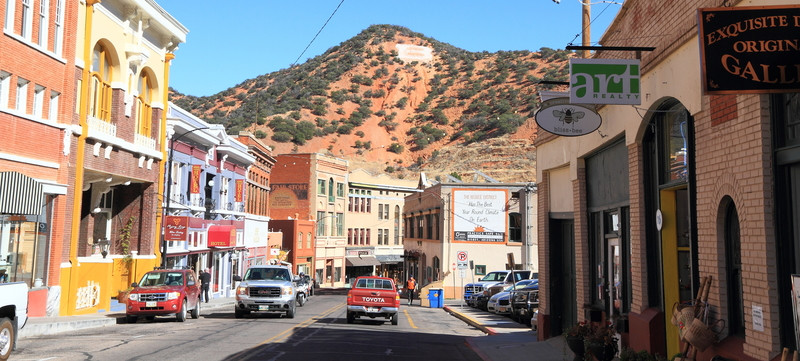
Tucked into the folds of the Mule Mountains in southeastern Arizona, Bisbee looks like the kind of place time forgot on purpose. Pastel Victorian houses climb the canyon walls on stilts and stone staircases, brick facades glow amber at dusk, and the whole town still hums faintly with the memory of a century spent hauling copper, silver, and gold out of the earth. But if you ask the people who actually live here, Bisbee never fully let go of what it buried. Locals will tell you, half-joking and half-serious, that Bisbee's ghosts never checked out of their rooms.

This is a town built on one of the richest mineral deposits ever found in the American Southwest. Between 1880 and the mid-1970s, the mines around Bisbee produced roughly 8 billion pounds of copper, along with over 100 million ounces of silver and nearly 3 million ounces of gold, making it briefly the largest and wealthiest city between St. Louis and San Francisco. That kind of money brought boomtown chaos: saloons, gambling dens, brothels, deadly mine accidents, robberies, and fires that reshaped entire blocks. When the ore ran out and Phelps Dodge shut down underground operations in 1975, the miners and fortune-seekers left, but the buildings stayed, and so, it seems, did some of the people who lived and died in them .
Walking Bisbee's narrow canyon streets after dark, it's easy to understand why this town has earned a reputation as one of the most haunted places in Arizona. Here's a look at the stories, stops, and spirits that make up the Bisbee Ghosts Walking Tour, and why they've kept visitors glancing over their shoulders for well over a century.
Why Bisbee Is So Haunted
Bisbee's hauntings aren't manufactured for tourists. They grow directly out of the town's real, documented history. This was a mining camp that exploded from nothing into a booming city almost overnight after copper was discovered in Tombstone Canyon in 1877 [web:15]. Fortunes were made and lost in weeks. Miners worked brutal twelve-hour shifts underground, then spent their pay in the saloons and gambling halls lining streets like Subway Street, where fights were common and more than a few men met sudden, violent ends in the shadows between buildings.
Add to that a string of devastating fires, including the 1908 blaze that tore through Main Street and forced the town to rebuild in brick and stone, and you get a place where tragedy is layered into nearly every structure still standing today. The steep, stair-stepped alleys and mine shafts that crisscross beneath the streets only add to the atmosphere. Locals say shadowy figures still slip between the old pillars where Sowles Avenue crosses forgotten mine workings, and on quiet nights along Subway Street, some walkers report phantom bootsteps clicking behind them, or the sudden smell of old tobacco smoke drifting through air that should be empty.
The Inn at Castle Rock: Built Over a Cave
The walking tour begins at the Inn at Castle Rock, a building constructed in 1895 directly against the cliffside, right over an old Apache Springs cave. It's a striking way to start a ghost walk, because the inn's foundation itself is unusual: half building, half geology. Over its long history, the inn has survived at least four major fires, an impressive feat in a town where fire regularly leveled entire blocks.
But the story that lingers here is darker. A mother was tragically shot and killed on the premises, and guests staying in the upper rooms have long reported a panicked figure dressed in 1890s attire pacing the hallways, moving from room to room as though still searching for something, or someone, she never found.
The Oliver House and Its 26 Deaths
A short walk downhill and around the bend brings you to one of the most infamous stops on the entire route: the Oliver House. Built in 1909 by Mrs. Ida Oliver as a boarding house for miners and travelers, the building has been linked to as many as 26 documented deaths over its lifetime, an extraordinary number for a single structure. The most notorious incident was a 1932 murder-suicide in what's now known as the Blue Room.

Guests who stay in Room 13 today still describe sudden icy drafts that cut through otherwise warm rooms, along with the lingering sense of a man's presence, said to be tied to a shooting over an unpaid debt decades ago. Whether or not you believe in spirits, there's something undeniably heavy about standing outside a building with that much loss behind its walls.
Subway Street and the Sound of Phantom Footsteps
Despite the name, there has never been a subway anywhere near southern Arizona. During Bisbee's mining heyday, Subway Street was known instead for rowdy saloons and wild nighttime revelry, the kind of place where miners burned through a day's pay in a few hours. Where alcohol flowed freely and tempers ran short, violence followed, and the narrow street has its share of untimely deaths tucked into local memory.
Today, walkers report hearing footsteps clicking on the pavement behind them, only to turn and find the street empty. Others catch a whiff of old tobacco smoke with no visible source, a small but effective reminder that this stretch of road hasn't entirely let go of its rowdier decades.
City Park's Hidden Cemetery
One of the most quietly unsettling stops on the tour isn't a haunted hotel at all, it's a park. City Park looks like an ordinary patch of green space with a set of century-old stone stairs, but it was originally Bisbee's main cemetery. When marked graves were relocated to Evergreen Cemetery in the early 1900s, many unmarked graves, particularly those belonging to young children, were left behind. No headstones, no names, just quiet ground where families once buried people they loved.
Locals say that's exactly who still plays there. Visitors and residents frequently report hearing children's laughter near the stone stairs at dusk, along with the sound of small feet running and chasing up and down steps that have stood for more than a hundred years. One resident who walks her dog through the park every evening says she's heard it dozens of times over the years and has long since stopped trying to trace where the sound is coming from.
The Silver King's Eternal Party
Further along the route, the Silver King Hotel offers one of Bisbee's most vivid ghost stories. The building's most famous resident is said to be an injured miner who shuffles down the upstairs hallway late at night, dragging one heavy foot behind him, as though he never fully recovered from whatever accident sent him home from the mines. Some say he never made it home at all.
Then there's the sound of a party that never ended: phantom laughter and the clink of glasses drifting from the staircase around closing time, as if a celebration from 1905 is still quietly winding down decades later. The hotel's late owner, Danielle Martinez, spoke about hearing that same laughter more times than she could count, never once finding an actual gathering waiting for her when she went to check. Guests regularly photograph strange light orbs and misty silhouettes near the upper window frames, proof, or at least suggestion, that the Silver King never really closed for the night.
Hotel La More's Woman in White
Perhaps the tour's most cinematic stop is Hotel La More, where the presiding legend involves a woman with long white hair and a flowing, thin white gown, said to smell faintly of lilacs before she ever appears. According to local lore, three boys cutting through the alley behind the hotel one rainy night saw her step through a back door and raise her hand, not in greeting, but as a warning to stop. Moments after they turned and ran, rock and earth came roaring down exactly where they had been standing.
Guests also report a small, silent cat that curls up at the foot of beds in rooms where no living animal has ever been allowed, a detail so understated that longtime visitors say it unsettles them more than any of the tour's louder ghost stories.
The Old Bisbee Jail and the Headless Miner
Built in 1904, the Old Bisbee Jail once held the town's drunks, brawlers, and outlaws behind bars that are, remarkably, still intact today. Standing outside and looking through the barred windows, it's easy to imagine the restless energy that must have filled this cellblock during Bisbee's rowdiest years.
Nearby, Tombstone Canyon carries one of the tour's most disturbing tales. In December 1909, the Bisbee Evening Miner reported that a miner working the Lowell Shaft found a man slumped against the timbers, reached out to help him, and lifted a body with no head. Days later, two more miners reportedly encountered the same faceless figure waiting silently underground. The story spread through camp fast, leaving hardened miners rattled by something with no eyes to watch them back.
The Copper Queen and the Bisbee Massacre
No haunted tour of Bisbee is complete without the Copper Queen Hotel, one of the most iconic landmarks in the state, and the Letson Loft Hotel, the final stop on the route. The Letson Loft sits on the site of the old Goldwater-Castaneda Mercantile Store, where in 1883 five outlaw cowboys botched a payroll robbery and opened fire on the street, killing four innocent townspeople, including a pregnant woman. It's the kind of senseless tragedy that locals say still clings to the walls, a fitting, somber note to end on after a night spent walking through more than a century of Bisbee's darkest history.
Walking Bisbee After Dark
What makes the Bisbee Ghosts Walking Tour so effective isn't special effects or theatrics, it's the fact that every stop sits on real, documented history. The boarding houses that saw dozens of deaths, the streets built over old mine shafts, the park quietly resting on forgotten graves: none of it is invented. Bisbee's steep canyon streets, stair-step alleys, and century-old brick facades were built by real people living hard, often short lives during one of the richest mining booms the American West ever saw.
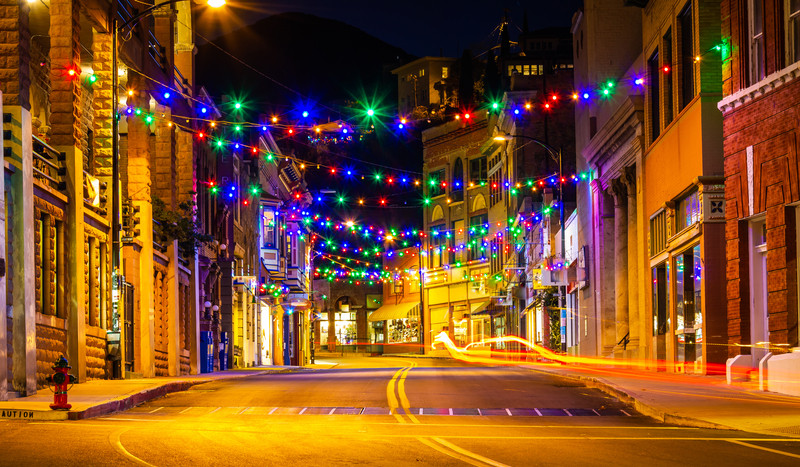
That's ultimately what makes Bisbee's ghosts so compelling. They aren't just spooky stories designed to sell tickets. They're echoes of miners, madams, outlaws, and everyday residents whose lives were cut short within these walls, and whose presence, according to generations of locals and visitors alike, never quite faded from the streets they once called home.
Ready to Walk Bisbee's Haunted Streets Yourself?
Reading about Bisbee's ghosts is one thing. Standing outside the Oliver House at dusk, or catching the scent of lilacs near Hotel La More, is another entirely. Download the full self-guided Bisbee Ghosts Walking Tour now and follow the exact route, stop by stop, story by story, through the haunted heart of one of Arizona's most historic mining towns. Lace up your walking shoes, keep your wits about you, and see for yourself whether Bisbee's ghosts are ready to meet you too.


Comments