
Bloody Sunday Derry: The History Behind One of the Troubles' Defining Days

Bloody Sunday in Derry remains one of the most significant and painful events of the Troubles, a period of conflict in Northern Ireland that spanned three decades.
On January 30, 1972, a civil rights march through the Bogside neighborhood ended in the deaths of unarmed civilians, an event that shaped the course of the conflict for years afterward.
Understanding Bloody Sunday in Derry means understanding the neighborhood where it happened, the people who lived through it, and the long road the city has since walked toward peace and reconciliation.

TAKE A SELF-GUIDED TOUR OF DERRY
Want to walk this history yourself, with the stories playing right where they happened?
Take our Derry's Bloody Sunday and The Troubles Walking Tour. It's a self-guided, location-aware audio tour that starts at the Bloody Sunday Monument and moves through the Bogside and Derry's historic walls.
Along the way, you'll discover:
The community-built museum that tells this history from the inside
The famous wall that marked a self-declared "Free Derry"
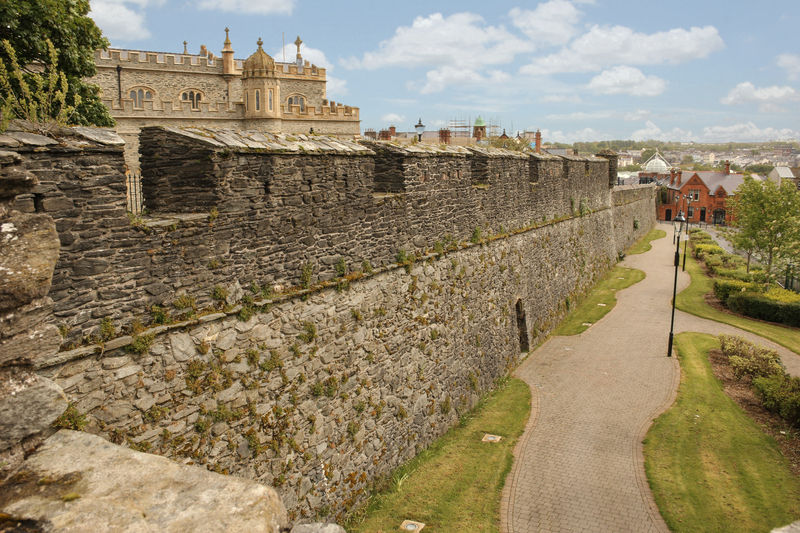
How the city's walls witnessed centuries of conflict long before the Troubles
Stories play automatically as you walk, so there's no group and no schedule to worry about, ending at the Peace Flame, a symbol of how far the city has come.
Check out our Derry's Bloody Sunday and The Troubles Walking Tour here.

WHAT HAPPENED ON JANUARY 30, 1972
A civil rights march organized to protest internment without trial made its way through the Bogside neighborhood of Derry.
As the march reached its final stages, soldiers opened fire, and thirteen unarmed civilians were killed that day, with a fourteenth man dying of his injuries months later. The events sent shockwaves through Northern Ireland and beyond, and the day became known simply as Bloody Sunday.
THE BOGSIDE AND FREE DERRY CORNER
In the years leading up to and following Bloody Sunday, the Bogside became the center of "Free Derry," a self-declared autonomous area where residents barricaded their neighborhood and organized their own defenses and communications.
The gable wall reading "You Are Now Entering Free Derry" was first painted in January 1969 and still stands today, one of the most recognizable murals in Ireland and a lasting symbol of a community that refused to be silenced.
REMEMBERING AND RECKONING WITH THE PAST
The Museum of Free Derry, built and run by people connected to the events themselves, tells this history from the inside, using firsthand accounts and personal artifacts.
Decades of investigations followed Bloody Sunday, eventually leading to a formal government apology in 2010, more than three decades after the event took place. That long journey toward accountability is part of what makes visiting Derry today so meaningful.
FROM CONFLICT TO PEACE
Derry's story doesn't end with the Troubles. The Peace Flame, near the historic Guildhall, stands as a quiet, hopeful symbol of reconciliation, marking how far the city has traveled since 1972.
Visiting the Bloody Sunday Monument, the Bogside murals, and the Peace Flame in a single walk offers a rare, complete arc, from tragedy to remembrance to hope.
PLAN YOUR TRIP
Ready to see this history for yourself?
Check out our Derry travel guide for tips on where to eat, where to stay, and how to plan a thoughtful, meaningful day in the city.
Check out the travel guide here.


Comments